Professional Dryer Vent Installation Morristown NJ Trusts
A dryer vent installation seems simple — until you've seen the consequences of one done wrong. Improperly installed dryer venting is a leading cause of dryer fires, mold growth in walls, energy waste, and shortened appliance life. Common mistakes include using flammable foil flexible ducting in concealed runs (a code violation), excessive run length, too many bends, undersized ducting, missing or inadequate termination hoods, and venting into attics or crawl spaces instead of outside. Smart Air Duct Cleaning Morristown installs dryer vents to current International Residential Code (IRC) and manufacturer specifications. We use rigid galvanized metal ducting in concealed runs, keep the path as short and straight as possible, terminate properly outside with a backdraft damper, and seal every joint. The result is a venting system that performs safely for decades.
When You Need New Dryer Vent Installation
There are several scenarios that call for fresh installation rather than just cleaning. New construction obviously requires it. Renovating or reconfiguring a laundry room often means re-routing the vent. Moving a dryer to a new location — especially second-floor or interior installations — requires careful design. If your existing vent uses flexible foil duct in a concealed wall or floor run, code requires replacement with rigid metal. Long, restricted runs that can't dry a load efficiently may need re-design and re-installation. Damaged exterior terminations, vents that pull pests into your home, or vents that dump into the attic instead of outside all warrant proper installation.
Our Dryer Vent Installation Process
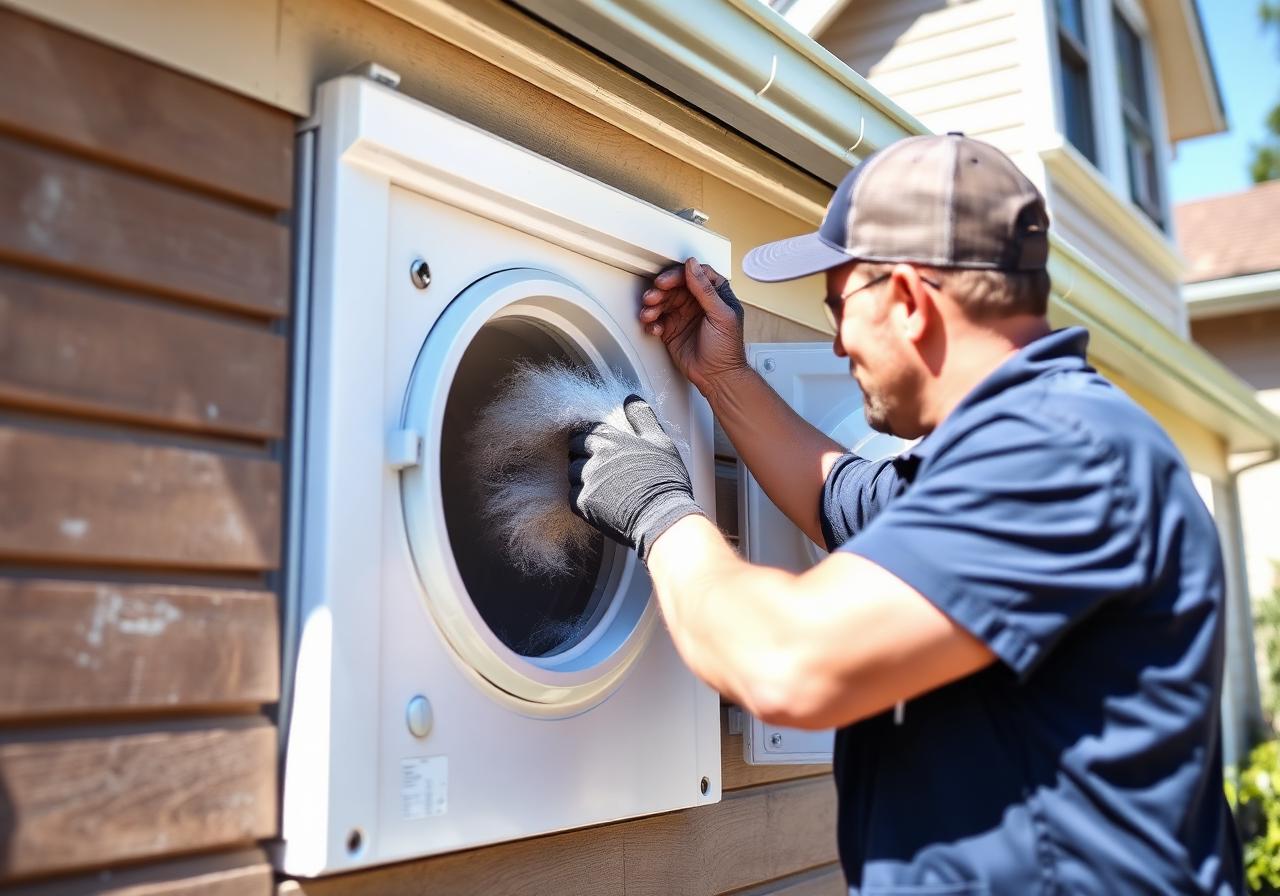
We start with a site visit to evaluate the dryer location, the most direct safe path to an exterior wall or roof termination, and any structural considerations. We measure the total run length and number of bends to confirm it falls within manufacturer limits (typically 35 feet maximum less 5 feet per 90° elbow). We choose the right termination location — exterior wall when possible, roof only when wall venting isn't practical. Installation uses 4" galvanized rigid metal duct with sealed joints, properly supported every 4 feet. The connection at the dryer uses a short section of UL-2158A approved transition duct. The exterior termination receives a proper hood with backdraft damper and pest screen. We seal every penetration through walls, ceilings, and roofs to weatherproof the installation.
Why Proper Dryer Venting Matters
A correctly installed vent moves moisture and lint outside efficiently, dramatically reducing fire risk and dry times. It prevents humidity from damaging walls and framing. It keeps pests, birds, and weather out of your home. It allows your dryer to operate within manufacturer specifications, which extends its lifespan and maintains warranty coverage. And it gives you peace of mind that the laundry room — one of the most fire-prone areas in any home — is as safe as it can be.